


 monsurat
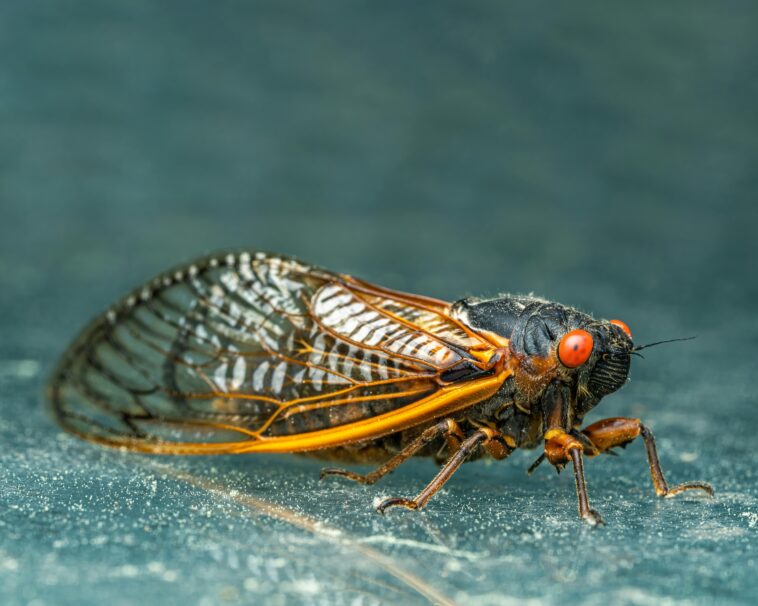
Cicadas are fascinating insects known for their loud, distinctive calls and unique life cycles. Cicadas are a superfamily, the Cicadoidea, of insects in the order Hemiptera (True Bugs).
Cicadas vary in size, generally ranging from 2 to 5 cm in length. They have prominent eyes set wide apart, short antennae, and membranous front wings that are transparent with distinct veins. They can be green, brown or black with markings in various patterns.
They have an extremely loud song, produced in most species by the rapid buckling and unbuckling of drum-like tymbals (located on the sides of their abdominal base). The male Cicadas produce this noise to attract females for mating.
Cicadas are found worldwide, with the highest diversity in tropical regions. They prefer warm climates and are often found in forests, woodlands, and gardens. They live in trees, feeding on watery sap from xylem tissue, and laying eggs in a slit in the bark.
In the nymph stage, they spend most of their time underground, with the duration ranging from a few years to 13 or 17 years. When ready to mature, nymphs emerge from the ground, usually in large numbers.
After molting, they become adults, lasting only a few weeks to a few months. The majority of species are active during the day as adults, with some calling at dawn or dusk. However, a few rare species are known to be nocturnal.
There are two types of Cicadas, namely the Periodical Cicadas and the Annual Cicadas. The Periodical Cicadas, which are native to North America, emerge in coordinated intervals of 13 or 17 years. The Annual Cicadas, also referred to as “dog-day” cicadas, appear annually and have a more regular life cycle.
Cicadas are preyed upon by birds, and burrowing mammals. They are also eaten by spiders, bats, wasps and mantises. Though the emergence of the periodical cicadas in large numbers overwhelms predators, ensuring that a substantial number of them survives.
Visit www.africanpridemagazine.com for more




GIPHY App Key not set. Please check settings