


 monsurat
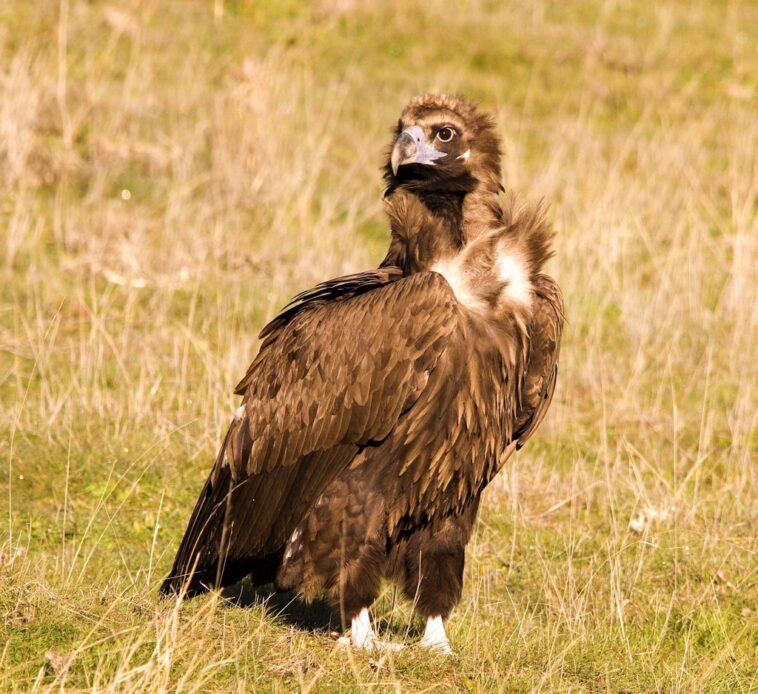
An in-depth look into the ecology, behavior and conservation efforts surrounding the magnificent cinereous vulture.
The Cinereous vulture, also known as the Eurasian black vulture, is one of the largest birds of prey in the world. The bird has a wingspan ranging from 2.5 to 3.1 meters and a length of about 98 to 120 centimeters. They have a distinctive dark brown to black plumage, with a pale neck ruff and a grayish-white head.
Their strong, hooked beaks are adapted for tearing flesh, and they have powerful talons for grasping prey. The adults have brown eyes, a purplish cere, a blue-gray bill and pale blue-gray legs. They have excellent eyesight and can spot carrion from high altitudes while soaring.
Cinereous vultures inhabit a wide of range of habitats, including open plains, mountains, forests and rocky cliffs. They are mostly found in parts of Europe, and Asia, including Spain, Portugal. France, Greece, Russia, Turkey, Iran and Mongolia.
Primarily, they are scavengers, feeding on carion, including large mammals like deer, wild boar, and livestock. Cinereous vultures are highly social birds and often gather in groups at carcasses. They breed in loose colonies, with nests rarely being found in the same or rock formation, unlike other vulture species which often nest in tight-knit colonies.
Naturally, they breed in rocky cliffs or trees, constructing large nests out of stick, grass, and other materials. They usually lay one or two eggs per clutch, with an incubation period of around 50 to 60 days. Both parents participate in incubating the eggs and raising the young, which fledge after about three to four months.
The cinereous vulture has declined over most of its range in the last 200 years, largely due to poisoning by eating poisoned bait put out to kill dogs and other predators. The specie is listed as Near Threatened on the IUCN Red List.
Conservation efforts, including captive breeding programs and habitat conservation, are underway to help protect these birds and their habitat.
Visit www.africanpridemagazine.com for more


GIPHY App Key not set. Please check settings