


 Monsurat
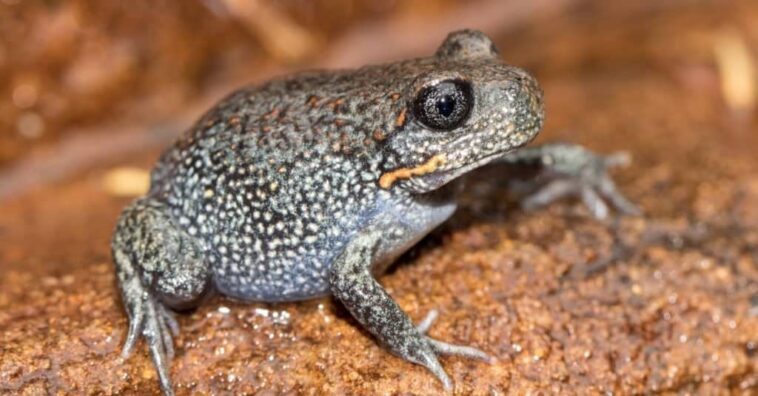
As the name suggests, burrowing frogs are adapted to burrow into the ground, and are found in Australia.
Burrowing frogs are generally small in size, with a flattened body and short legs. They have a round head with small eyes and a short snout. Their skin is smooth and moist, and they have well-developed webbing on their feet.
One of the most unique features of burrowing frogs is their ability to burrow into the ground. They do this using their strong forelimbs and specialized spade-like structures on their feet. They typically burrow into the soft soil found in damp areas such as swamps, marshes, and floodplains.
Naturally, they use their hind legs to push soil out of the way as they burrow deeper into the ground. Some species of burrowing frogs are capable of burrowing several meters underground, while others may only burrow a few centimeters.
Burrowing frogs are nocturnal and feed on small insects, spiders, and other invertebrates. They are also known to consume small vertebrates such as other frogs.
Burrowing frogs are found primarily in Australia, including the sand frog, water-holding frog, and turtle frog, with some species also found in nearby islands such as Papua New Guinea and Indonesia. These frogs are adapted to living in wetland habitats, where they can find the moist soil they need to burrow into.
Some species of burrowing frogs are also found in drier regions, where they may use burrows to escape the heat and conserve moisture. Some of these species are threatened due to habitat loss, pollution, and the introduction of non-native predators such as feral cats and foxes
In addition to their burrowing ability, burrowing frogs have other adaptations that help them survive in their wetland habitats. Their skin is moist and smooth, which helps them absorb oxygen through their skin. They also have well-developed webbing on their feet, which allows them to swim efficiently and helps them move through soft, muddy soil.
Visit www.africanpridemagazine.com for more


GIPHY App Key not set. Please check settings